

Is Your Sunscreen As Safe As You Think?
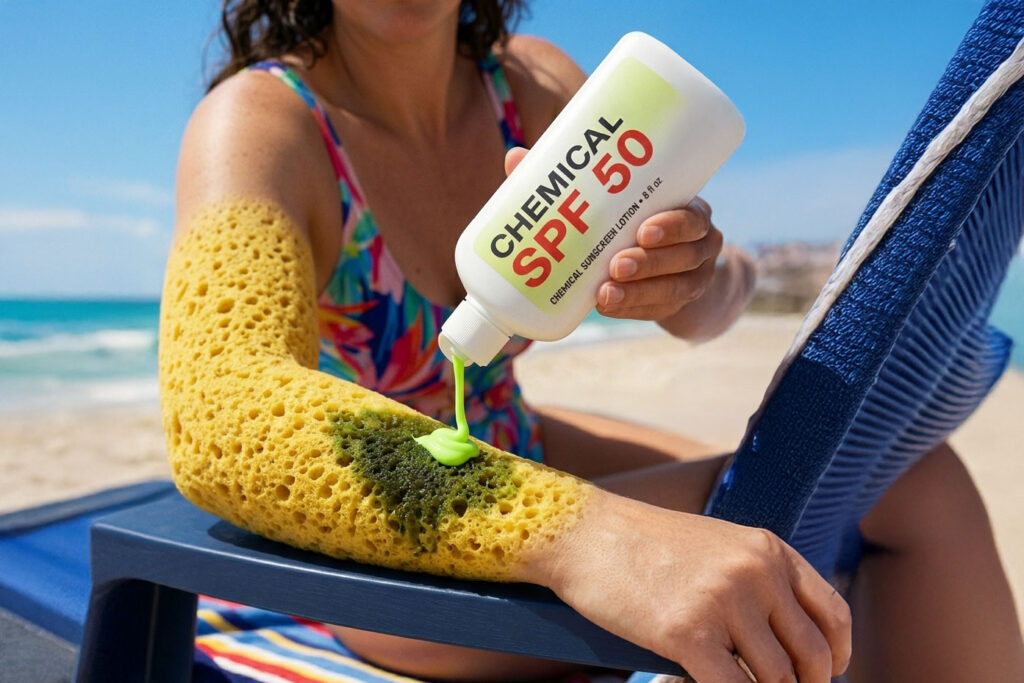
Have you ever stopped to consider that your skin is similar to a giant sponge that absorbs whatever you slather on it?
Disclosure: As an Amazon Associate, we earn from qualifying purchases made through links in this post at no extra cost to you.
While we often view our skin as a solid, impenetrable wall, it actually functions as a semi-permeable membrane. Consequently, the ingredients in your sunscreen don’t always just sit on the surface; many are specifically designed to be absorbed into the skin.
The Invisible Absorption Problem
Although health authorities, including the NHS, continue to recommend sun protection as part of a balanced safety approach, we must address the “invisible” side of the equation. Since many mainstream products hit the market, Skin cancer rates have risen over time. Experts attribute this to factors such as improved detection, longer life expectancy, and increased intermittent sun exposure (like holidays abroad).
There is no clear evidence that sunscreen use increases cancer risk, but discussions continue around ingredient safety and long-term exposure.
The Great Sunscreen Debate
I noticed something curious while looking at old family photos from the 1960s. Back then, hardly anyone used high-SPF creams, yet the incidence of melanoma was remarkably lower than it is today. Because we spend more money on protection than ever before, we expected better health outcomes than what we are seeing. This does not mean we should stop protecting our skin. Instead, it suggests we need to look closer at the specific ingredients we are slathering on our children.
Common Ingredients and Their Potential Risks
It is important to understand that not all formulas are created equal. In fact, many bottles contain chemical filters that have been associated with hormone disruption in laboratory settings. However, the relevance of these findings at typical human exposure levels is still being studied. For instance, the National Institute of Environmental Health Sciences has highlighted certain chemicals that may interfere with the body’s natural systems.
- Oxybenzone: This filter has shown endocrine activity in studies and is often detected in human breast milk.
- Octinoxate: Some research explores whether this chemical influences thyroid function after long-term exposure.
- Homosalate: Some studies suggest this ingredient may accumulate in the body faster than it is eliminated, though research is ongoing.
- Benzene: Although not an intended ingredient, this known carcinogen triggered major recalls of aerosol sprays recently due to manufacturing contamination.
- Avobenzone: This chemical often requires stabilizers because it can become unstable when exposed to direct sunlight.
A Potential Threat to Our Oceans
I was saddened when I realized that what might be a concern for us can contribute to damage in sensitive marine ecosystems. Every time we take a dip, we leave behind a “slick” of chemicals that can disrupt delicate habitats. Furthermore, the National Oceanic and Atmospheric Administration (NOAA) reports that even tiny amounts of these filters can cause harm to marine life. Therefore, choosing the wrong SPF can impact the survival of the very reefs we love to visit on holiday.
How Some SPF Ingredients Affect Marine Life
Because I want to protect the planet while I protect my kids, I was shocked to learn how deep this problem goes. It isn’t just about the coral; it affects the entire food chain.
- Coral Bleaching: Chemicals like oxybenzone make young coral more susceptible to bleaching even in cooler waters.
- Fish Deformities: Certain UV filters have been linked to reproductive issues in various fish species in lab trials.
- Dolphin Health: In addition, sunscreen chemicals have been detected in the tissues of marine mammals far from the shore.
- Shellfish Damage: Some ingredients make it harder for creatures like mussels to grow their shells properly.
Your Skin Deserves Better: The Power of Mineral Protection
At Swap the Toxins, we believe in protection that is effective, safe for your body, and kind to our planet. For this reason, we prioritize mineral-based options over chemical ones. Both mineral and chemical sunscreens are approved for use, but many people prefer mineral options due to ingredient transparency and skin sensitivity. Instead of using ingredients that absorb into your skin, Mineral sunscreens primarily sit on the surface of the skin and reflect or scatter UV radiation.
The Mineral Hero Ingredients
First, Zinc Oxide acts as a powerful, broad-spectrum blocker that protects against both UVA and UVB rays. Next, Titanium Dioxide serves as another effective physical filter. These natural minerals sit on top of your skin and reflect UV light away like a mirror. Because they start working immediately, you do not have to wait twenty minutes before letting the kids run into the yard. Moreover, they are less likely to cause irritation for those of us with sensitive skin.
The Swap That Solves the Problem
We have spent hours looking at the data so you do not have to. We tested, filtered, and verified dozens of brands to find the ones that actually stay on while you are pushing the stroller. Our selection process is incredibly strict because I won’t recommend something I wouldn’t put on my own daughter. We look for non-nano minerals and transparent lists that do not hide behind vague terms like “fragrance.”
Ready for Our Best Ingredient-Conscious Sunscreen Picks?
Don’t let the marketing “fog” confuse you anymore. Choosing a safe option should be easy, affordable, and effective for the whole family. If you want to skip the chemicals and get straight to the stuff that works, we have sorted the best options for you.
Final Thoughts
Living a lower-tox life is about making better choices, not perfect ones. You do not need to hide in the dark, but you should feel confident about what you are rubbing into your skin. I have found that a few smart swaps make a world of difference for both my budget and my family’s well-being.

Sarah Jones
Sarah Jones is a contributing writer for the Swap The Toxins Team, focused on simplifying ingredient safety for everyday families. This article was created using AI-assisted research and reviewed by the Swap The Toxins editorial team, led by a founder with over 20 years of engineering and product analysis experience.
Compliance Note: The content within this article is curated and vetted by the Swap The Toxins editorial team. We align with the strict standards of our product experts.
FAQs for Sunscreen
A1: I noticed some headlines about this. In reality, certain aerosol recalls involved benzene contamination, but this is widely considered a manufacturing fault rather than a standard ingredient in all products.
A2: Health experts suggest this is likely due to better detection, longer life expectancy, and more frequent high-intensity sun exposure during holidays.
A3: Yes. I found that zinc oxide is recognized as a safe and effective broad-spectrum blocker by major health authorities.
A4: To keep our oceans healthy, I always look for “non-nano” mineral ingredients. You should also check the label to ensure you avoid oxybenzone or octinoxate.
A5: Using a mineral moisturizer with SPF is a brilliant way to protect your face daily. It means you don’t have to rely on chemical filters that absorb into the skin.
Continue Your Non-Toxic Swap Journey…
Ready to transform more areas of your life? We have comprehensive guides for both home and body product categories, plus our non-toxic gifting hub:
- Non-Toxic Home Swaps: See vetted reviews for Non-Toxic Home Swaps for a cleaner living space.
- Non-Toxic Body Swaps: See vetted reviews for your Non-Toxic Body Care routine
- Clean Beauty Swaps: Discover safer alternatives for your makeup bag with our Non-Toxic Cosmetics Guide.
- The Non-Toxic Gift Guide Hub: Explore our curated selections for every occasion, ensuring your high-value gifts are always safe and sustainable.
- For Our Full Library: Explore all articles, guides, and insights in the Swap The Toxins Blog.