
The Teflon Trap: Why You Need the Best Non-Toxic Air Fryers This Year
Are you searching for the Best Non-Toxic Air Fryers because you’re terrified that your healthy “oil-free” dinner is actually serving up a side of aerosolized PFAS?
Disclosure: As an Amazon Associate, we earn from qualifying purchases made through links in this post at no extra cost to you.
As a researcher specialized in the biological effects of trace pollutants, I find it tragically ironic that the most popular health appliance of the decade is often a literal “off-gassing oven.” We buy these devices to reduce fat, yet we ignore the molecular load introduced by non-stick coatings at high temperatures. Consequently, your quest for a leaner waistline might be increasing your body’s toxic burden.
Why Most Air Fryers Are Biological Risks
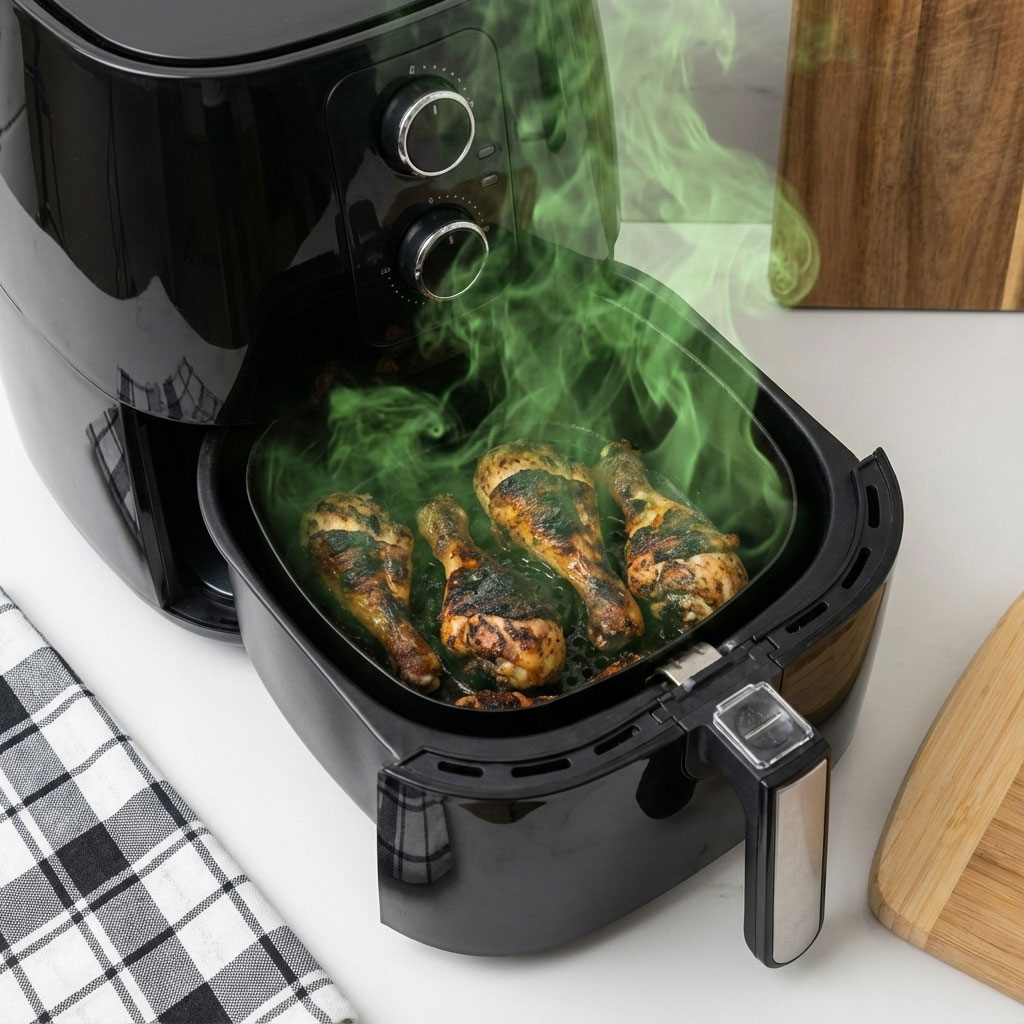
When evaluating air fryers, we must look beyond the crispy results and focus on the internal lining. Most conventional units utilize “forever chemicals” like PTFE (Teflon) to ensure food slides off easily. However, my analysis of thermolysis—the breakdown of substances by heat—reveals that these coatings can begin to degrade at temperatures common in air frying. For instance, when PTFE reaches high heat, it can release toxic fumes that cause flu-like symptoms in humans and are lethal to birds. Therefore, the “convenience” of non-stick is a high-stakes gamble with your respiratory health.
Specifically, as a Clinical Cynic, I scrutinize these common “Standard” features:
- PTFE/PFOA Coatings: These synthetic polymers are linked to endocrine disruption and metabolic interference.
- Plastic Housing Off-gassing: Many cheap units use low-grade external plastics that release VOCs when the internal heating element reaches 400°F.
- Aerosolized PFAS: High-speed fans can circulate microscopic degraded particles directly into your food and kitchen air.
- Chemical “New Car” Smell: This odor is actually the smell of volatile organic compounds entering your lungs.
The Forensic Evidence: My Fight for Scientific Certainty
Furthermore, I often find myself reconciling the need for definitive scientific certainty with the fast pace of viral kitchen trends. I recently analyzed a case where a colleague raved about their new “eco-friendly” fryer, only for me to find undisclosed “ceramic-reinforced” coatings that still contained trace plasticizers. It felt like a high-stakes game of competitive chess; the manufacturer made a move to hide the toxins, and I had to counter with a deep-dive into their patent filings. As a result, I’ve learned that “PFOA-free” often means they just swapped one toxic analog for another.
To ensure your home remains a sanctuary, I prioritize these clinical-grade benchmarks:
- Glass or Stainless Steel Interiors: These materials are chemically inert and do not react with food at high temperatures.
- Third-Party Testing: I look for Prop 65 compliance and independent lab verification of “Zero PFAS.”
- Mechanical Stability: The basket and tray must be made of solid materials, not just coated aluminum which can leach metals.
The Swap That Solves the Problem
Now, this is where the real work happens. Based on the Scientific criteria I just laid out, my team and I have compiled a shortlist. We rigorously filtered out the greenwashing, tested for verified third-party lab reports, and confirmed material integrity. We only move forward with swaps that meet our high-bar standard. Therefore, we have excluded units that rely on synthetic non-stick coatings and focused on medical-grade inertness.
Ready for Our Best Non-Toxic Air Fryers Picks?
If you’re ready to stop reading complex data and simply implement the perfect solution for your conscious home, click below to see the only comprehensive Air Fryer recommendations we trust. I have personally compared the thermal stability and chemical profiles of these models to ensure they meet my standard for purity.
Nia’s Final Thoughts
Choosing an air fryer is a daily exercise in risk management. While the market is flooded with sleek designs and “smart” features, the biological reality depends on what happens at a molecular level when the heat turns on. Do not let a high-tech appliance introduce a secondary load to your lungs. Instead, stick to the data, prioritize inert materials like glass or stainless steel, and ensure your home remains a sanctuary of true respiratory safety.
Compliance Note: The content within this article is curated and vetted by the Swap The Toxins editorial team, aligning with the strict standards and expertise of our dedicated product experts.
Frequently Asked Questions:
No, but the vast majority of mainstream models use PTFE (Teflon). Truly non-toxic options utilize stainless steel or borosilicate glass to avoid chemical leaching.
Absolutely not. Many brands remove PFOA but still use PTFE or other PFAS chemicals. You must look for “PFAS-free” or “Toxic-Free” certifications.
This is “off-gassing.” It occurs when the heat causes volatile organic compounds (VOCs) in the plastics or coatings to turn into gas. If this persists, the unit is likely a biological risk to your indoor air quality.
Continue Your Non-Toxic Swap Journey…
Ready to transform more areas of your life? We have comprehensive guides for both home and body product categories, plus our non-toxic gifting hub:
- Non-Toxic Home Swaps: See vetted reviews for Non-Toxic Home Swaps for a cleaner living space.
- Non-Toxic Body Swaps: See vetted reviews for your Non-Toxic Body Care routine
- The Non-Toxic Gift Guide Hub: Explore our curated selections for every occasion, ensuring your high-value gifts are always safe and sustainable.
- For Our Full Library: Explore all articles, guides, and insights in the Swap The Toxins Blog.