
Is Your Mattress ‘Off-Gassing’ More Than Your Partner?
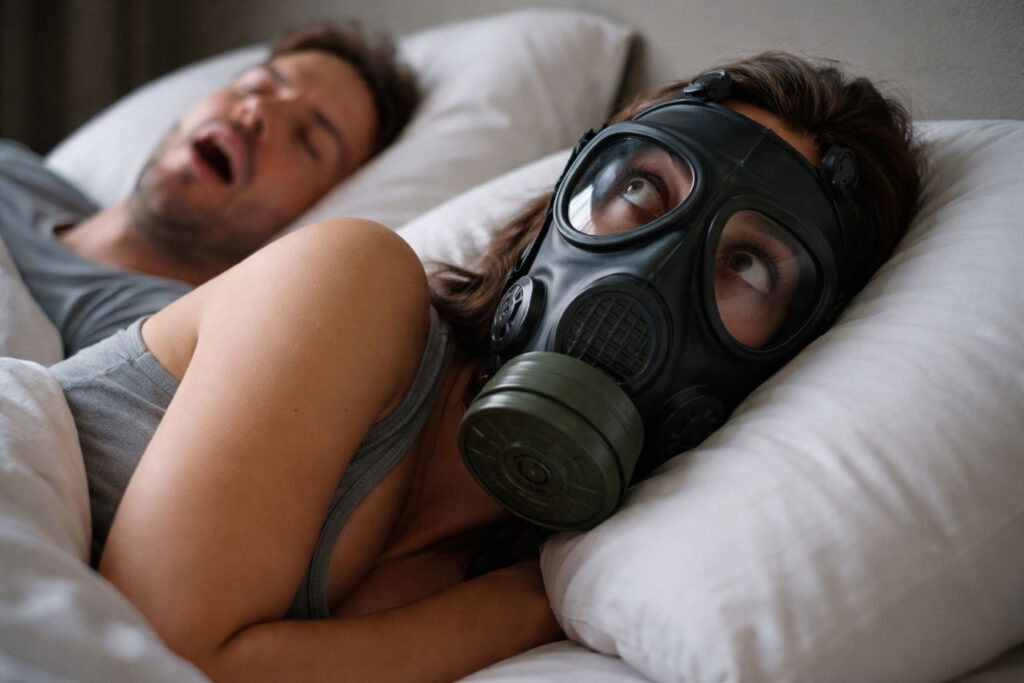
We have all been there: your partner “breaks wind” under the covers and you are suddenly fighting for fresh air. But here is a sobering analytical reality: are you ready to switch to non-toxic mattresses, or are you more worried about a five-second biological puff than eight hours of synthetic off-gassing?
Disclosure: As an Amazon Associate, we earn from qualifying purchases made through links in this post at no extra cost to you.
Furthermore, the data indicates that while your partner’s “gas” is unpleasant, it is chemically transient and biodegradable. Your mattress, however, is a high-mass source of Volatile Organic Compounds (VOCs) that “leak” into your breathing zone every single second of the night. I have analyzed the emission rates: unlike a fleeting biological event, your petroleum-based foam mattress is a constant, low-grade emitter.
One gas is a funny story for the morning; the other is far from a laughing matter.
The Chemistry of the “Under-the-Covers” Microclimate
When you trap yourself under the blankets, you are creating a concentrated atmospheric environment. Most people worry about their partner’s emissions, but your body heat is actually acting as a catalyst for the polyurethane foam beneath you. This thermal energy increases the rate at which chemicals like toluene and formaldehyde escape the foam structure, Source: ES&T Letters.
I have reviewed the evidence regarding “thermal-induced VOC release.” The reality is that your mattress can be the largest contributor to indoor air pollution in your home. You are essentially sleeping in a slow-motion “micro-environment” of petroleum byproducts.
The differences in “bedroom gases” are clear:
- Biological Emissions: Primarily methane and hydrogen sulfide. These are transient and mostly a social hazard.
- Mattress VOCs: Benzene, formaldehyde, and phthalates. These are persistent, synthetic, and documented to influence indoor air quality levels.
- Flame Retardants: Odorless organophosphates that do not simply “air out” once you open a window.
Beyond the Stench: My Personal Switch
In laboratory settings, we measure parts per million (ppm). In my bedroom, I measure peace of mind. I realized that my “comfortable” memory foam bed was effectively a block of solidified oil that was constantly degrading. Consequently, I decided that if I would not accept industrial fumes in my workspace, I certainly would not sleep on them.
Demanding a foundation that was molecularly stable meant moving away from synthetic foams. These foams rely on chemical cocktails for their ‘memory.’ Instead, I looked toward materials that have existed in nature for millennia.
I now rely on these three stable alternatives:
- GOLS Certified Natural Latex: Derived from rubber tree sap; it provides support without the chemical “burps” of synthetic foam.
- Organic Wool Fire Barriers: Naturally flame-resistant, so you are not breathing in antimony or other fire-retardant dust.
- GOTS Organic Cotton: A breathable surface that does not trap heat or chemical vapors against your skin.
The Swap That Solves the Problem
Now, this is where the real work happens. Based on the scientific criteria I just laid out, my team and I have compiled a shortlist. Specifically, we rigorously filtered out the greenwashing, verified the lab reports, and made sure these products are actually available. Our focus is transparency and lower-emission materials rather than claiming any product is perfect. We did the heavy analytical lifting so you can focus on waking up with absolute clarity.
Ready for Our Best Non-Toxic Mattresses Picks?
If you’re ready to stop breathing in synthetic fumes and simply implement the perfect solution for your home, click below to see the only non-toxic mattresses we actually trust.
Nia’s Final Thoughts
Your partner’s gas might be a temporary nuisance, but your mattress’s gas is a long-term health strategy. Do not let a “comfortable” feel trick you into a toxic situation. Demand transparency, choose verified organic materials, and start waking up in a clean environment. Precision in your bedroom leads to certainty in your recovery.

Nia Montoro-Cortés
Nia Montoro-Cortés is a contributing writer for the Swap The Toxins Team, specialising in ingredient purity and sensitivity-focused product analysis. With a background in environmental science, she focuses on understanding how trace compounds and long-term exposure may affect the body. This content is created using AI-assisted research and reviewed by the Swap The Toxins editorial team.
Compliance Note: The content within this article is curated and vetted by the Swap The Toxins editorial team. We align with the strict standards of our product experts.
FAQs for Non-Toxic Mattresses
A1: That “new bed smell” is the off-gassing of VOCs from the polyurethane foam and adhesives used in manufacturing. In non-toxic mattresses, this smell is largely absent or replaced by a faint, natural wool scent.
A2: While the initial heavy scent may fade, low-level off-gassing can continue for the life of the product as the foam degrades. It is better to choose a material that is inherently stable from day one.
A3: Yes. Natural latex is inherently antimicrobial and dust-mite resistant, making it a superior choice for those with sensitivities compared to synthetic foams.
A4: While we are not suggesting that mattresses cause cognitive decline, some research explores how long-term exposure to certain VOCs (Volatile Organic Compounds) may influence inflammation or “brain fog” symptoms in sensitive individuals. This is why many health-conscious sleepers are pivoting toward lower-emission, non-toxic mattresses to reduce their overall chemical burden.
A5: For many individuals, morning stuffiness or throat irritation is a reaction to the particulates and gases released by degrading synthetic foams. Switching to a mattress made from organic wool and natural latex removes these common irritants from your immediate breathing zone, which often leads to a noticeable improvement in morning respiratory clarity.
Continue Your Non-Toxic Swap Journey…
Ready to transform more areas of your life? We have comprehensive guides for both home and body product categories, plus our non-toxic gifting hub:
- Non-Toxic Home Swaps: See vetted reviews for Non-Toxic Home Swaps for a cleaner living space.
- Non-Toxic Body Swaps: See vetted reviews for your Non-Toxic Body Care routine
- Clean Beauty Swaps: Discover safer alternatives for your makeup bag with our Non-Toxic Cosmetics Guide.
- The Non-Toxic Gift Guide Hub: Explore our curated selections for every occasion, ensuring your high-value gifts are always safe and sustainable.
- For Our Full Library: Explore all articles, guides, and insights in the Swap The Toxins Blog.