
Beyond the Hype: Is a Mushroom the Best Non-Toxic Plastic alternative?
Is Mycelium fungi the best non-toxic Plastic hope for our systemic waste problems, or is it just another layer of greenwashing?
Disclosure: This post may contain affiliate links or links that lead to product recommendation pages. As an Amazon Associate, we earn from qualifying purchases. If you make a purchase after following one of our links, we may earn a commission at no extra cost to you.
Most people see mushrooms as just a pizza topping or a forest curiosity. However, I see them as a molecular solution to a systemic health crisis. We are currently drowning in petroleum-based foams that poison our air, land, sea and our bodies. Specifically, the “new box smell” you encounter during unboxing is actually a warning sign. It is time we stop accepting toxic convenience and start looking at the root structures of the earth.
Mycelium is an incredible technology. Specifically, it offers a real path away from toxic foams. Therefore, we must look closely at where it succeeds and where it still has work to do.
The Toxicity of Synthetic Foams
We need to be precise about what we are replacing. Mycelium is not a universal substitute for every plastic bottle or bag in your kitchen. Instead, it is a high-performance replacement for expanded polystyrene (Styrofoam). Many people don’t realize that styrene is a health hazard. According to the National Toxicology Program, styrene is reasonably anticipated to be a human carcinogen.
Furthermore, the production of these plastics is a dirty, chemical-heavy process that harms workers and communities. Crucially, these materials never truly disappear. They simply break down into microplastics that eventually end up in our water and food. Therefore, we need a replacement that is biologically compatible with life.
- Styrene Off-gassing: Synthetic foams leak volatile organic compounds (VOCs) into your indoor air.
- Chemical Leaching: Plastics can transfer endocrine disruptors to anything they touch.
- Persistent Waste: Traditional foams last for centuries in landfills, leaching heavy metals.
- Production Toxicity: Manufacturing creates hazardous byproducts that poison local water tables.
Consequently, when we talk about “toxic off-gassing,” we are specifically targeting the VOCs released by these foams during unboxing or degradation. While not all plastic is actively poisoning your air, Styrofoam is a documented offender. Therefore, the value of mycelium is in removing these specific toxins from our immediate environment. Furthermore, traditional production is heavy on chemical inputs. Specifically, the EPA highlights that chronic exposure to styrene can impact the central nervous system.
- Targeted Replacement: Mycelium excels at replacing rigid foams and protective packaging inserts.
- Chemical Reduction: It eliminates the need for petroleum-derived styrene in shipping materials.
- Waste Upcycling: Most fungal materials grow on agricultural waste like hemp or corn husks.
- Health Priority: Removing Styrofoam reduces the cumulative chemical load in your living space.
Addressing the Fungal Fear: Wood vs. Pollen
I have heard from many of you who are worried about mold. Specifically, the idea of “fungus” in a shipping box feels like a biological risk. However, it is helpful to think of it this way: Mycelium is like the wood of a tree, while spores are like the pollen. When you buy a wooden chair, you aren’t worried about it releasing pollen into your house. Similarly, once mycelium is heat-treated, it is an inert, solid structure. It is essentially “dead” biomass that can no longer grow or release spores.
Furthermore, we must be honest about the production process. Growing this material still requires energy. Specifically, facilities must sterilize the substrate and dry the final product. While this is far cleaner than a chemical refinery, it is not a “zero-impact” miracle. Research into bio-composites shows that while they are significantly better for the planet, they still require responsible energy management.
- Biologically Inert: Heat-treating ensures that no active fungi enter your home environment.
- Structural Safety: The final material is a dense network of fibers, not a loose pile of spores.
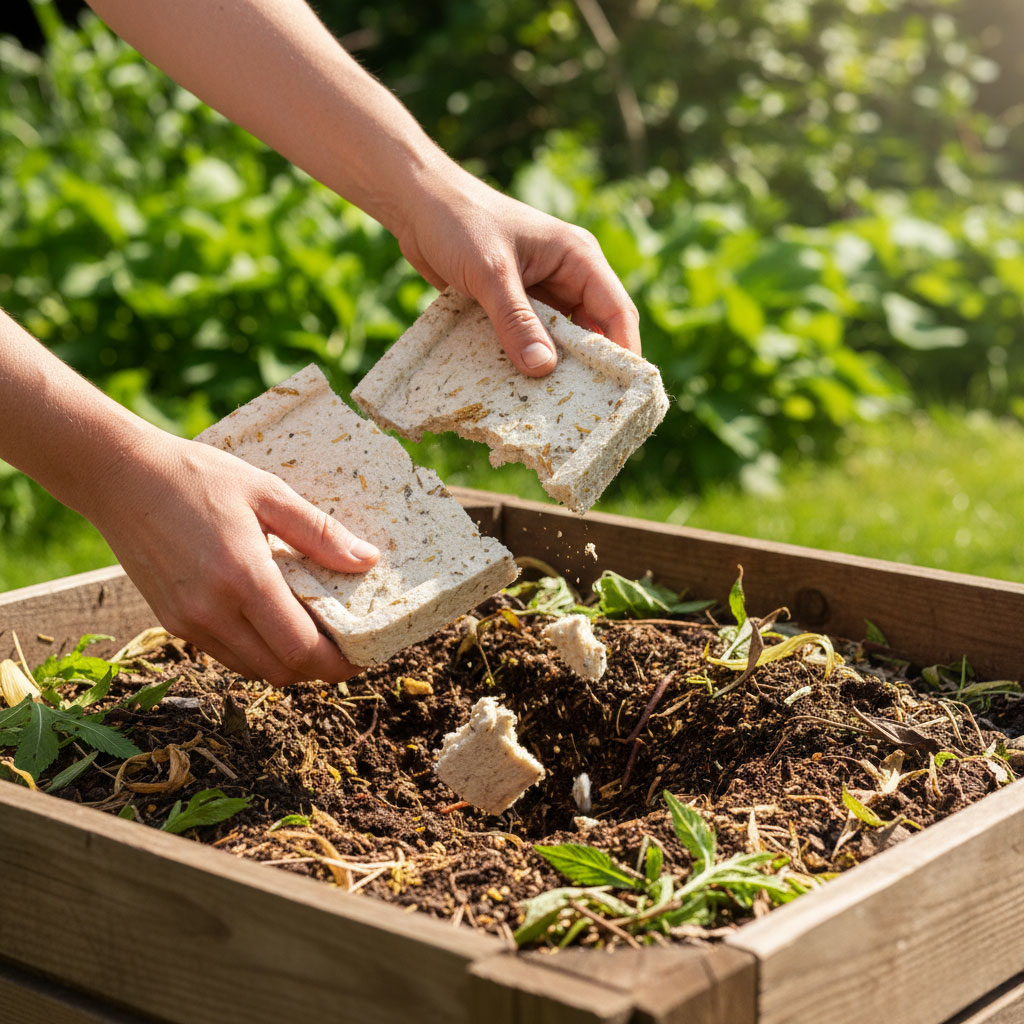
- Compost Reality: These materials break down beautifully in a home compost bin. However, they still need oxygen to degrade properly.
- Odors: While rare, improperly dried organic material can have a faint earthy scent.
The Engineering Truth
As noted in Nature Communications, the integration of 3D printing and biomaterials allows us to replace pollution-causing materials in the construction industry. By growing mycelium onto porous gyroid scaffolds, we create a material that is fire-resistant and durable. This is a far cry from a “mushroom in a box.” This is the future of non-toxic, carbon-capturing infrastructure.
Liam’s Final Thoughts
Mycelium isn’t a magic wand that makes the global plastic crisis disappear overnight. It won’t replace your water bottle or your sandwich bags yet. However, it is the most effective tool we have for killing off Styrofoam for good and also has interesting potential in the construction industry. Specifically, its ability to be grown into structural, fire-resistant insulation or custom-molded shipping buffers proves that we can build a world where our packaging and homes are as healthy as the products inside. Therefore, let’s focus on the wins we can make today.
Compliance Note: The content within this article is curated and vetted by the Swap The Toxins editorial team. We align with the strict standards of our product experts.
Frequently Asked Questions:
A1: Yes. Mycelium composites have excellent compressive strength and shock absorption. Specifically, they are used to protect heavy electronics and fragile glassware during shipping.
A2: No. Because the material is heat-treated during manufacturing, the fungal cells are dead. It may absorb water like a piece of wood, but it will not “come back to life” or spread mold.
A3: No. Mycelium should not be put in the plastic or paper bin. Instead, it is designed for composting. Specifically, you should break it into small pieces and add it to your garden or compost pile where it returns nutrients to the soil.
Continue Your Non-Toxic Swap Journey…
Ready to transform more areas of your life? We have comprehensive guides for both home and body product categories, plus our non-toxic gifting hub:
- Non-Toxic Home Swaps: See vetted reviews for Non-Toxic Home Swaps for a cleaner living space.
- Non-Toxic Body Swaps: See vetted reviews for your Non-Toxic Body Care routine
- The Non-Toxic Gift Guide Hub: Explore our curated selections for every occasion, ensuring your high-value gifts are always safe and sustainable.
- For Our Full Library: Explore all articles, guides, and insights in the Swap The Toxins Blog.