
Alert: Toxic Shampoo Cancer Risk Chemicals Exposed
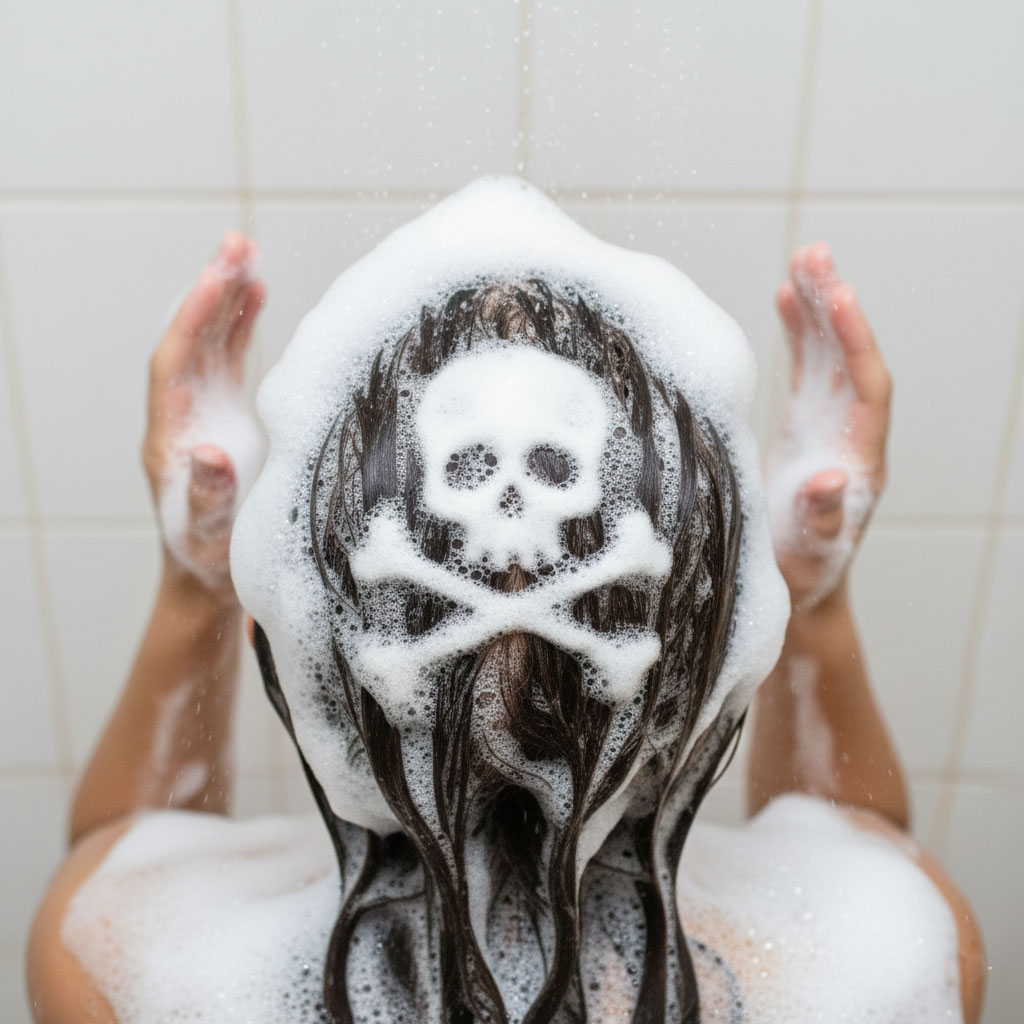
Are you worried about the risk of Toxic Shampoo cancer chemicals hiding in your favourite conventional shampoo? Thankfully, we have a you covered.
Disclosure: As an Amazon Associate, we earn from qualifying purchases made through links in this post at no extra cost to you.
Think about your daily routine. Specifically, you probably use shampoo every day, or close to it. You lather it up, massage it deeply into your scalp, and let it sit before rinsing. Therefore, this isn’t just a surface clean; it’s an intimate chemical exchange. Leveraging my background in environmental health, I rigorously scrutinize the data to uncover toxic shampoo chemicals that cause a cancer risk.
The average scalp is a vascular, highly permeable area. In fact, it’s one of the body’s most efficient entry points for chemicals. Consequently, when you apply a cocktail of aggressive synthetics to this area day after day, you are creating a predictable, cumulative exposure. The data is definitive: the problem with conventional shampoo isn’t just surface irritation. Instead, it’s the systemic challenge posed by persistent EDC’s (Endocrine-Disrupting Chemicals) and other chemicals linked to cancer risks.
The Chemical Cocktails in Common Toxic Shampoo Ingredients
The scientific literature shows that the scalp is a highly vulnerable pathway. Studies comparing different body sites show that the high density of hair follicles and a thinner epidermal barrier means the scalp has some of the highest rates of chemical absorption. Therefore, this fact fundamentally changes how we must evaluate daily hair care products. We are not just washing our hair; we are exposing our system to a constant stream of trace chemicals.
However, the risk here is not acute. It is the chronic, low-dose exposure that interferes with fundamental biological signaling. Ultimately, it is vital to know exactly what is penetrating your skin barrier.
My data-driven analysis dictates the immediate elimination of these four high-risk toxic shampoo ingredients from any acceptable formula:
- Formaldehyde Releasers (e.g., DMDM Hydantoin, Quaternium-15): These preservatives are designed to slowly off-gas formaldehyde. Additionally, they are classified as a known human carcinogen and a potent sensitizer linked to allergic contact dermatitis.
- “Fragrance” (Parfum): This is an industry loophole that often conceals phthalates, which are potent plasticizers linked to reproductive and developmental toxicity, interfering directly with hormonal health.
- Parabens (e.g., Propylparaben): Because these mimic estrogen, they can interfere significantly with the endocrine system.
- SLS and SLES (Sodium Lauryl/Laureth Sulfate): While primarily irritants that damage the scalp’s protective barrier, their inclusion can increase the penetration of other, more toxic chemicals.
Beyond Marketing: Analyzing the Endocrine Disruption Data
I spent years analyzing molecular data—not marketing copy. The industry’s rapid adoption of “natural” or “botanical” replacements for old chemicals often results in regrettable substitution. Crucially, we must maintain data-driven skepticism. This is because an ingredient being derived from a plant does not automatically make it non-toxic or safe for long-term endocrine health.
Importantly, I learned this firsthand when I tracked a ‘natural’ alternative to a common sulfate. I found it required a complex, untested synthetic stabilizer; therefore, I immediately halted my use. My personal philosophy is simple: If the molecular data is uncertain, the risk is too high. The solution isn’t just to swap out one chemical; rather, it’s to adopt an entirely clean formulation standard.
When vetting a scientifically safe shampoo swap, I look for these structural assurances:
- INCI List Purity: Total elimination of any known endocrine-disrupting chemicals (EDCs), including hidden sources like “fragrance.”
- Certified Safe Surfactants: Use of gentle, verified non-ionic or amphoteric surfactants that maintain the scalp’s barrier integrity.
- Full Third-Party Disclosure: Mandating complete transparency, often requiring third-party testing to verify the purity of raw material batches, especially for oils and extracts.
- Minimal Ingredients: A concise ingredient list reduces the probability of unintended chemical interactions and limits potential allergen exposure for sensitive skin.
The Swap That Solves the Problem
Now, this is where the real work happens. Based on the Scientific criteria I just laid out, my team and I have compiled a shortlist. We rigorously filtered out the greenwashing, tested for verified third-party lab reports on ingredient purity, and confirmed inventory and availability. We only move forward with swaps that meet my high-bar standard for ingredient purity and safety.
Ready for Our Vetted Picks?
If you’re ready to stop reading complex data and simply implement the perfect solution for your sensitive skin and endocrine system, click below to see the only comprehensive Shampoo recommendations we trust.
Nia Montoro-Cortés’s Final Thoughts
Do not underestimate the systemic impact of daily, chronic exposure to low doses of EDCs. Your shampoo is not just affecting your hair; additionally, it is affecting your health. The power to choose purity is yours. Therefore, demand the data and demand the certainty.
Frequently Asked Questions:
A1: You should strictly avoid formaldehyde releasers like DMDM hydantoin, synthetic fragrances containing phthalates, and parabens, as these are linked to cancer risks and endocrine disruption.
A2: Certain chemicals commonly found in shampoo, such as formaldehyde and coal tar dyes, are classified as known carcinogens, meaning chronic exposure through the scalp could increase long-term health risks.
A3: The scalp is highly vascular and has a high density of hair follicles, making it one of the most permeable areas of the body for toxins to enter the bloodstream directly.
A4: Not necessarily; many “natural” brands use “fragrance” as a loophole for phthalates or use “regrettable substitutions” that haven’t been properly tested for long-term endocrine safety.
A5: To avoid EDCs, check the label for ingredients like propylparaben, phthalates, and oxybenzone, and look for products that are third-party verified for ingredient purity.
Compliance Note: The content within this article is curated and vetted by the Swap The Toxins editorial team, aligning with the strict standards and expertise of our dedicated product experts.
Continue Your Non-Toxic Swap Journey…
Ready to transform more areas of your life? We have comprehensive guides for both home and body product categories, plus our non-toxic gifting hub:
- Non-Toxic Home Swaps: See vetted reviews for Non-Toxic Home Swaps for a cleaner living space.
- Non-Toxic Body Swaps: See vetted reviews for your Non-Toxic Body Care routine
- The Non-Toxic Gift Guide Hub: Explore our curated selections for every occasion, ensuring your high-value gifts are always safe and sustainable.
- For Our Full Library: Explore all articles, guides, and insights in the Swap The Toxins Blog.