

The 3 Best Air Purifiers Review (2025)
Evaluating the Best Air Purifiers
Are you searching for the best air purifiers but feeling overwhelmed by technical specs and marketing jargon? Most consumers believe that any device with a “filter” is inherently healthy, yet many modern units actually introduce a secondary chemical load into your home. We’ve uncovered a disturbing reality: some “smart” purifiers use ionizers and plasma technologies that generate ozone—a known respiratory irritant—or create secondary pollutants like formaldehyde when they react with common household gases. This “active” cleaning process often does more harm than good for those with sensitive lungs.
The solution lies in clinical-grade mechanical filtration that prioritizes passive capture over reactive chemistry. Consequently, we have focused our vetting process on units that utilize deep-bed activated carbon and true HEPA media, ensuring that pollutants are trapped forever rather than transformed into new toxins. By choosing a system certified by bodies like the California Air Resources Board (CARB), you ensure your home remains a sanctuary of biological safety. Our testing focuses on three pillars: zero ozone emission, substantial carbon weight for VOC adsorption, and verified particle capture rates.
It is time to take decisive action to protect your family’s respiratory health. You can stop the endless research because we have analyzed the clean air delivery rates (CADR) and noise signatures of every major model on the market. Below, you will find our strictly vetted shortlist of the three best air purifiers for 2025. These selections are designed to eliminate the mystery from your indoor environment, providing high-performance filtration without the “mystery fragrance” or ozone risk common in conventional high-street options.
Hidden Risk Factors
| To Avoid | Why to Avoid It & What it Does |
|---|---|
| Ozone (O3) | A byproduct of ionizers and plasma generators that can cause permanent lung tissue damage and asthma flares. |
| UV-C Secondary Reactions | Short-wave UV lights can react with VOCs in the air to create formaldehyde and other hazardous carbonyls. |
| “HEPA-Type” Media | A marketing term for filters that fail to meet the 99.97% capture standard, allowing fine particulate matter (PM2.5) into the lungs. |
| Thin Carbon Meshes | Low-value units use a “dusting” of carbon that saturates in days, leaving toxic gases and odors to recirculate. |
Our Top 3 Best Air Purifiers at a Glance
|
Best For Allergies

|
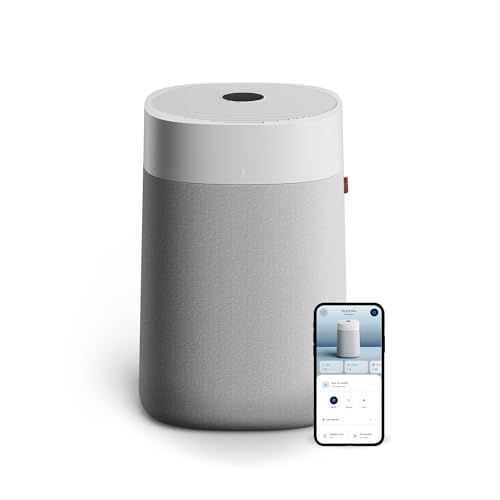
Best for Efficiency & Low Noise
|
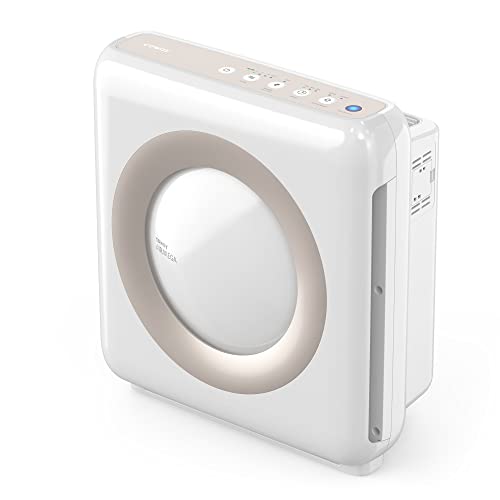
Best Value
|
|
Unique Value:
HyperHEPA filtration capturing particles 100x smaller than standard HEPA.
|
Unique Value:
Highest CADR in its class with whisper-quiet "QuietMark" certification.
|
Unique Value:
The most energy-efficient "Eco Mode" champion for bedrooms and home offices.
|
|
$1,199.99
|
$349.00
|
|
Your Best Air Purifier Review Choices
We know that one-size-fits-all solutions rarely work, especially when it comes to the products you bring into your home. Consequently, for every item in this category, we’ve carefully selected three distinct alternatives, each chosen to serve a specific consumer priority. Our goal is to present you with the best air purifiers tailored to your needs. You don’t have to compromise. We’ve identified the best option whether you prioritize Efficiency, demand superior Value, or require an Allergy-friendly solution for sensitive health needs.
🌸 Purity & Sensitive Choice: IQAir HealthPro Plus
The IQAir HealthPro Plus is the definitive choice for those who view air quality as a medical necessity. While other brands focus on aesthetics, IQAir prioritizes clinical-grade performance with its proprietary HyperHEPA technology. This system is certified to capture particles down to 0.003 microns, which is 100 times smaller than what a standard HEPA filter can handle. For families dealing with severe asthma, mold sensitivities, or chemical allergies, this unit acts as a total biological shield. It features the V5-Cell filter, packed with 5 lbs of granular activated carbon and alumina, designed specifically to adsorb the VOCs and toxic gases that Nia warned about in our blog.
In terms of metrics, the IQAir offers a CADR of approximately 300 cfm for smoke, which is lower than the Blueair but focuses on “purity over speed.” Its noise levels range from a near-silent 22 dB on Speed 1 to a more substantial 61 dB on Speed 6. Energy consumption is higher than average, pulling 20W on low and up to 135W on high. Most importantly, it completely lacks a smartphone app or Wi-Fi, a deliberate design choice to eliminate EMF interference and ensure long-term mechanical reliability. This is a “set it and forget it” clinical device for those who demand the highest possible standard for sensitive family members.
Cost Per Day (US): $1.15, (UK): £0.98
| ✅ BENEFITS | 💡 THINGS TO NOTE |
|---|---|
| Unmatched 0.003-micron capture. | High upfront cost and expensive replacement filters. |
| 5 lbs of deep-bed activated carbon. | Lacks smart features/app connectivity. |
| 10-year warranty (if registered). | Large, boxy design may not suit modern decor. |
🌎 Eco Choice: Blueair Blue Pure 211i Max
The Blueair Blue Pure 211i Max is the high-performance swap designed for open-concept homes and large living areas. If you need to clean the air in a 1,500 sq ft space twice every hour, this is the machine for the job. It utilizes Blueair’s HEPASilent technology, which combines mechanical filtration with a gentle electrostatic charge to pull particles into the filter. Most importantly, it is QuietMark certified, operating at just 23 dB on its lowest setting—truly quieter than a whisper. This makes it the ideal candidate for those who want clinical performance without the distracting hum of a high-power fan.
Performance-wise, the 211i Max boasts a massive CADR of 410 cfm across all categories (pollen, dust, and smoke). It is significantly more energy-efficient than the IQAir, consuming only 4W on low and maxing out at 46W. The “i” in the name signifies its smart connectivity; the Blueair app provides real-time PM2.5 monitoring and “Welcome Home” geofencing that ramps up purification before you walk through the door. While it does use an electrostatic charge, it is CARB-certified and ozone-free, making it a safe, high-volume choice for the modern conscious home.
Cost Per Day (US): $0.54, (UK): £0.48
| ✅ BENEFITS | 💡 THINGS TO NOTE |
|---|---|
| Exceptional CADR for huge spaces. | Filter life is shorter (6-9 months) in polluted areas. |
| Ultra-quiet operation (23 dB). | Smart app requires a stable Wi-Fi connection. |
| Sleek, customizable fabric pre-filters. | Pre-filters need regular vacuuming to maintain CADR. |
🛒 Value & Small Room Choice: Coway Airmega AP-1512HH Mighty
The Coway Airmega AP-1512HH, affectionately known as the “Mighty,” is the perfect swap for bedrooms, home offices, and nursery environments. It has been a cult favorite for years because it delivers clinical performance at a price point that makes whole-house coverage affordable. It features a 4-stage filtration system including a washable pre-filter and a true HEPA filter. The Mighty is particularly famous for its “Eco Mode.” When the internal sensor detects clean air for 30 minutes, the fan shuts off completely, saving energy and extending filter life—restarting only if air quality dips. This is the ultimate “Value” play that doesn’t compromise on purity.
The CADR is rated at 246 cfm for dust and 233 cfm for smoke, which is perfectly sized for rooms around 360 sq ft. Noise levels are impressive, starting at 24 dB, though Speed 3 can reach 53 dB. It is a compact powerhouse with energy consumption ranging from a tiny 3W in Eco mode to 77W at full blast. While it lacks the advanced smartphone app of the Blueair, it features a simple, intuitive interface and a built-in air quality indicator light. For those who want the best non-toxic air purifier on a budget, the Coway Mighty is the industry gold standard.
Cost Per Day (US): $0.34, (UK): £0.29
| ✅ BENEFITS | 💡 THINGS TO NOTE |
|---|---|
| Industry-leading Eco Mode for energy. | Design has remained unchanged for over a decade. |
| Very low daily operating cost. | The “Vital Ion” button should be kept OFF to avoid ozone. |
| Compact and easy to move between rooms. | Only covers up to 361 sq ft at 4 air changes/hour. |
How We Calculate the Daily Value of these Air Purifiers
Transparency is a core value at Swap The Toxins, especially when recommending high-ticket items like clinical-grade air purifiers. We don’t just look at the sticker price; we evaluate the total cost of ownership over a full year to give you an accurate “Cost Per Day” figure. This ensures you aren’t surprised by expensive maintenance or high energy bills later on.
Calculating Real-World Energy Impact
Our calculation formula is comprehensive. First, we determine the Energy Cost by taking the average wattage of the unit on a medium-high setting (simulating real-world use) and multiplying it by 24 hours of operation. We then apply the current 2025 national average electricity rates for both the US and the UK. Because energy prices can fluctuate, we use these standard benchmarks to provide a reliable estimate for your monthly budgeting.
Factoring in Filtration Maintenance
Second, we factor in the Filter Replacement Cost. For every unit, we research the manufacturer’s recommended replacement interval for all internal filters—including HEPA, carbon, and pre-filters. We take the total cost of a genuine replacement set and divide it by the number of days it is expected to last (e.g., 365 days for a Coway filter or up to 1,460 days for an IQAir HyperHEPA). Consequently, the final “Cost Per Day” you see in our reviews is the sum of both electricity and filtration maintenance.
Balancing Biological Safety and Household Budget
Finally, we prioritize units that offer high Value over their lifespan. A unit like the IQAir may have a higher daily cost, but its ability to capture 0.003-micron particles offers a level of biological safety that cheaper units cannot match. Conversely, the Coway Mighty’s “Eco Mode” significantly reduces energy consumption, making it the superior choice for budget-conscious families who still demand a toxin-free home. We believe that by understanding these costs upfront, you can make a choice that fits both your health needs and your household’s financial plan.
| Model | Avg. Wattage | Filter Set Price (US/UK) | Filter Life (Days) |
| IQAir HealthPro Plus | 80W | $250 / £290 | 1,095 (3-year avg) |
| Blueair 211i Max | 25W | $50 / £45 | 270 (9-month avg) |
| Coway Mighty | 30W* | $45 / £49 | 365 (1-year avg) |
*Note: Coway wattage is calculated lower due to the frequent engagement of its “Eco Mode” during 24/7 operation.
Total Value Comparison: Best Air Purifiers Daily Operating Costs
Understanding the “value” of an air purifier goes beyond the initial price tag. To help you budget for a toxin-free home, we have calculated the daily running costs based on 24/7 operation at a standard “Medium” fan speed. Consequently, these figures represent a realistic average for most households.
Our formula includes two main factors: Electricity Consumption (using 2025 national average rates) and Filter Maintenance (the cost of a genuine replacement set divided by its certified lifespan). While some units have a higher entry point, their long-lasting filters often result in better long-term value. Below is the data-backed comparison for our top three vetted swaps.
| Model | Avg. Daily Energy Cost | Daily Filter Wear | Total Cost Per Day (US/UK) |
|---|---|---|---|
| IQAir HealthPro Plus | $0.18 / £0.31 | $0.97 / £0.67 | $1.15 / £0.98 |
| Blueair 211i Max | $0.09 / £0.16 | $0.45 / £0.32 | $0.54 / £0.48 |
| Coway Airmega Mighty | $0.07* / £0.12 | $0.27 / £0.17 | $0.34 / £0.29 |
*Coway energy cost is adjusted for its proprietary “Eco Mode” efficiency.
How to Read This Data
If you are looking for the absolute Value champion, the Coway Airmega Mighty is the clear winner for smaller rooms, costing less than a single coffee per week to operate. However, for those with severe health sensitivities, the IQAir HealthPro Plus provides a “medical-grade” value. Although its daily cost is higher, it replaces the need for separate chemical scrubbers and specialized allergy treatments, making it a high-value investment for specific family needs.
Remember, we always recommend using genuine replacement filters. While “knock-off” filters are cheaper, they often lack the density required to meet non-toxic standards and can lead to higher energy draw as the motor struggles to pull air through inferior media. By investing in quality, you ensure both your lungs and your wallet are protected in the long run.
FAQs for Air Purifiers
A1: CADR stands for Clean Air Delivery Rate. It measures how many cubic feet of air a unit filters per minute. A higher CADR means the unit can clean a larger room more quickly.
A2: Only if they have a significant “deep bed” of activated carbon. Thin, carbon-coated meshes are insufficient. We recommend units like the IQAir which contains pounds of carbon for gas adsorption.
A3: Many ionizers produce trace amounts of ozone. While “safe” limits exist, we recommend choosing CARB-certified units and keeping ionization features turned off for maximum biological safety.
Continue Your Non-Toxic Swap Journey…
Ready to transform more areas of your life? We have comprehensive guides for both home and body product categories, plus our non-toxic gifting hub:
- Non-Toxic Home Swaps: See vetted reviews for Non-Toxic Home Swaps for a cleaner living space.
- Non-Toxic Body Swaps: See vetted reviews for your Non-Toxic Body Care routine
- The Non-Toxic Gift Guide Hub: Explore our curated selections for every occasion, ensuring your high-value gifts are always safe and sustainable.
- For Our Full Library: Explore all articles, guides, and insights in the Swap The Toxins Blog.